The “Civil Process Bond” Scam: Fake Court Documents Are Now Targeting Bitcoin ATM Customers
It Almost Worked
A customer came into one of our kiosks this week to make what he believed was a legitimate payment. He had a stack of official-looking documents — a U.S. District Court seal, an “Arrest Warrant,” a “Confidentiality and Nondisclosure Suppression Order,” and a step-by-step flyer titled “Understanding Your Kiosk Deposit.” He was told he owed a “civil process bond,” that he needed to pay it in Bitcoin before reaching the Sheriff’s Department, and that he wasn’t supposed to talk to anyone about it.
Something about it didn’t sit right with us, so we started asking questions — simple ones. Who told you to come here? Can you call the court back on a number you looked up yourself, not one they gave you? Why would a federal court accept Bitcoin? We went back and forth by text for a few minutes, and it became clear: this was a scam, built almost entirely out of documents designed to look official enough that no one would question them.
Nobody lost any money. But it was close — and it’s a good reminder of how far these scams have evolved. We want to walk through exactly what we saw, because the documents themselves are the best teaching tool.
What the Fake Documents Actually Said
Every one of these documents was fabricated, but they borrowed real-sounding language and official seals to create a sense of authority. Here’s what was actually wrong with them:
A “United States District Court — Civil Division” letterhead paired with a made-up “Bitcoin (BTC) Network” seal — there is no such federal seal, because no federal agency issues or accepts a “BTC certificate.”
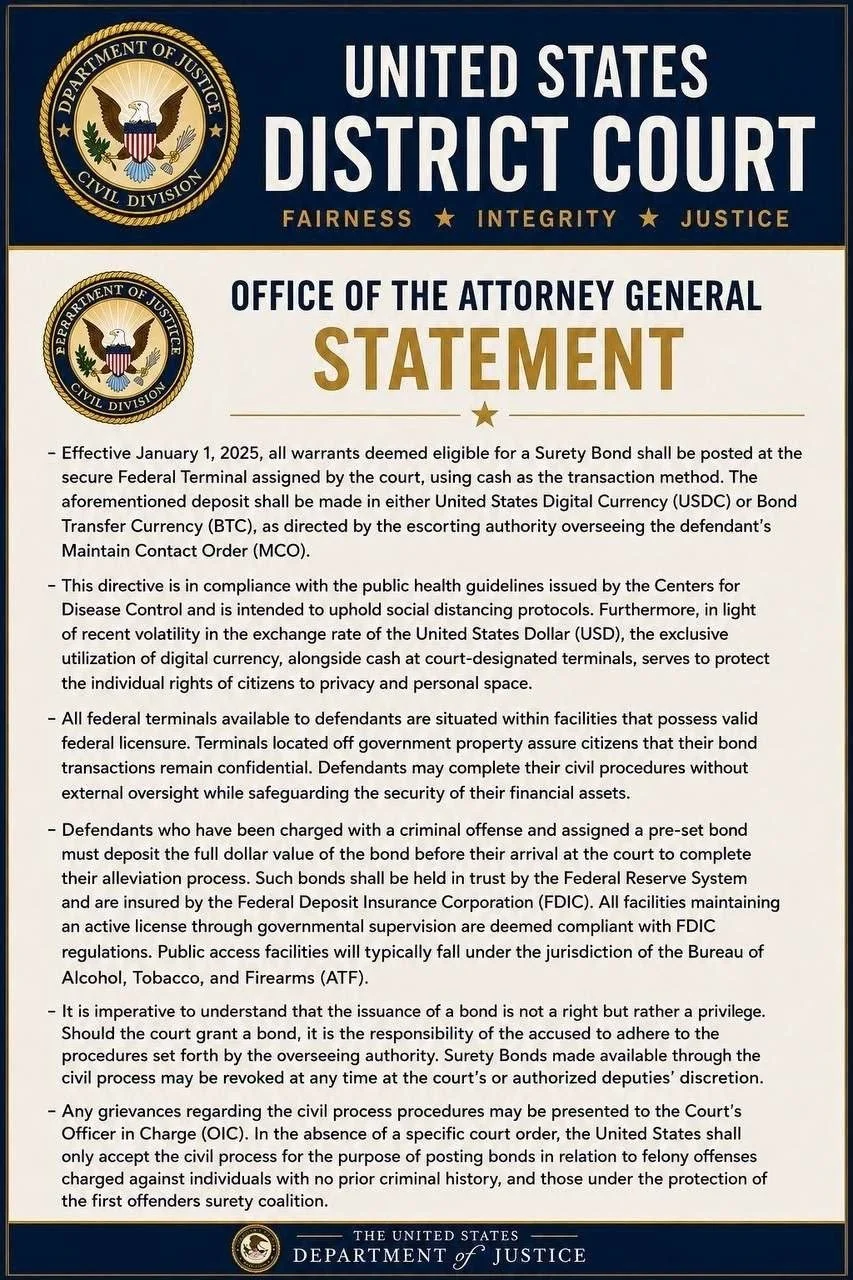
References to paying a bond into “United States Digital Currency (USDC)” or “Bond Transfer Currency (BTC)” — real federal bonds are paid through the court clerk, not a Bitcoin ATM.
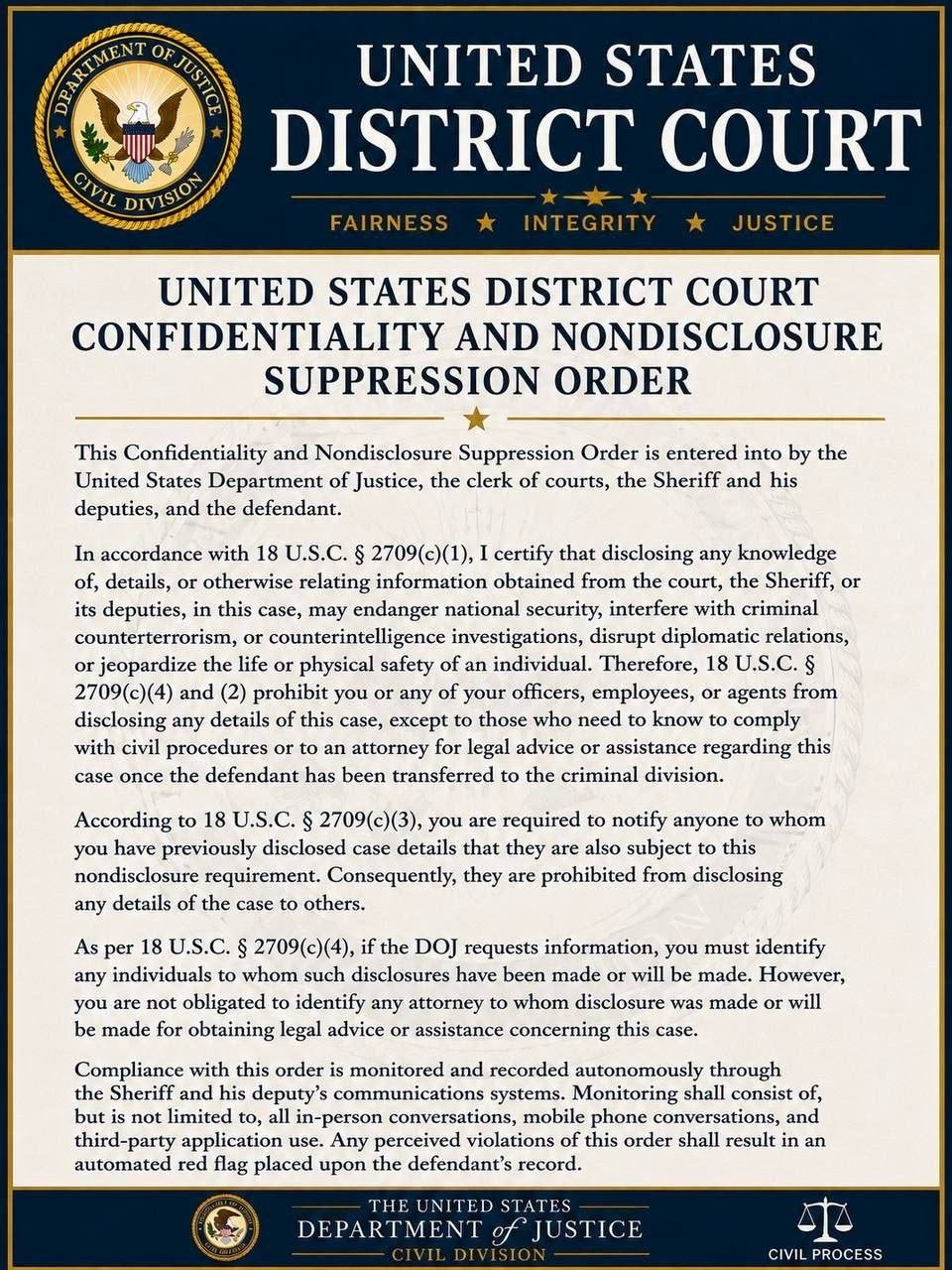
A “Confidentiality and Nondisclosure Suppression Order” instructing him not to discuss the matter with anyone — isolating a victim from friends, family, or their bank is one of the oldest scam tactics there is.
Citations to real-sounding statutes (18 U.S.C. § 2709, 17 U.S.C. § 2703) that have nothing to do with bail or civil bonds — they exist, but describe completely unrelated things, like national security letters and copyright.
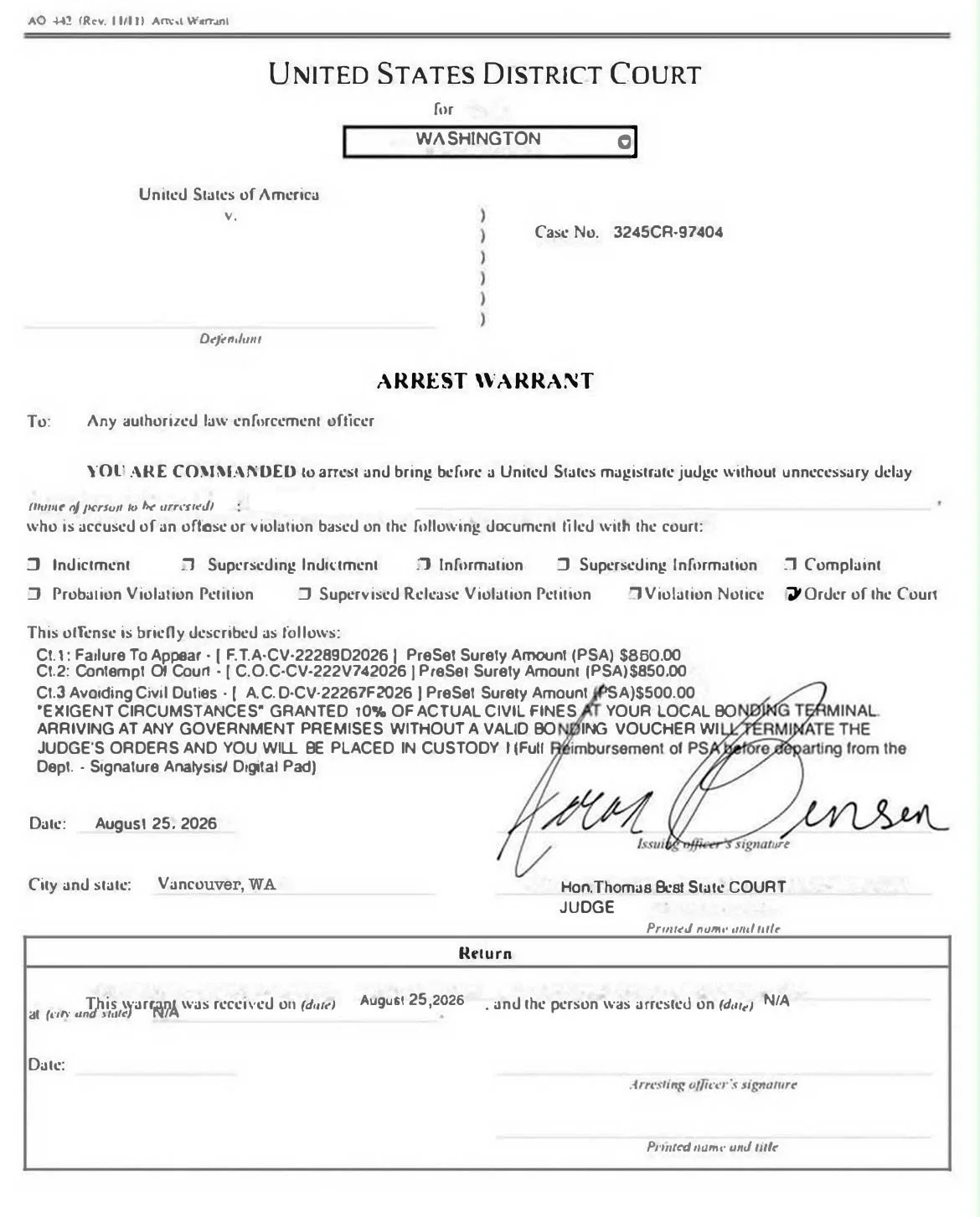
A generic “arrest warrant” with a vague case number, a judge whose title doesn’t match any real court role (“Hon. Thomas Best State COURT JUDGE”), and a threat of “immediate arrest” if he didn’t comply — manufactured urgency to stop him from slowing down and checking.
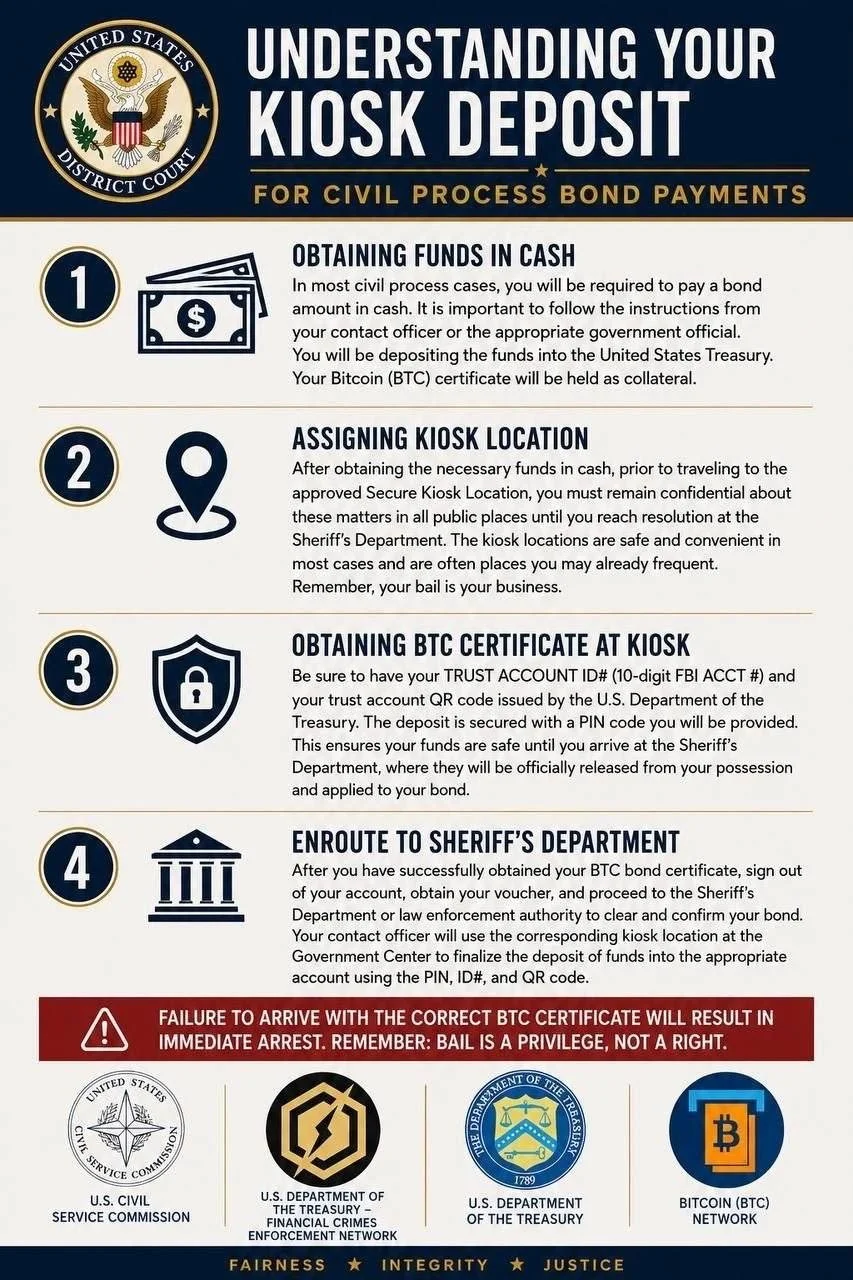
An instruction sheet walking him through exactly how to use a Bitcoin ATM, step by step — because the scammer's whole goal was getting him alone at a kiosk with cash in hand.
The Pattern Behind Every Version of This Scam
The documents change — sometimes it’s a “court bond,” sometimes an IRS notice, a warrant, a utility shutoff notice, a family emergency. But the structure is always the same:
Fear or urgency: an arrest, a shutoff, a loved one in danger — something that makes you want to act now.
Authority: real-looking seals, badge numbers, legal citations, or a caller who claims to be law enforcement.
Isolation: an instruction not to tell anyone, or a story about why you can’t just call the agency back yourself.
A Bitcoin ATM as the only accepted payment method.
No real court, law enforcement agency, or government office will ever ask you to pay anything — bail, a fine, back taxes, bond, or otherwise — at a Bitcoin ATM. Ever. That single fact is enough to end almost every version of this scam on its own.
What To Do If This Happens to You
Stop. Don’t deposit anything, and don’t let anyone rush you.
Hang up or step away, then look up the agency’s number yourself — never use a number or website the caller or documents gave you.
Call or text us at 503.985.8066. We’d always rather talk you through it than watch you send money to a scammer.
Run it through our free Scam Checker at scamchecker.bitcoinnw.com for an instant second opinion.
Our operators are trained to ask questions when something feels off — that’s exactly what happened here. If a customer seems nervous, secretive, or is repeating a story that sounds rehearsed, we’ll slow things down and ask. It's not us being nosy. It's often the only thing standing between a customer and a scammer.
More Resources
For a full breakdown of common Bitcoin ATM scams and the red flags to watch for, visit our Bitcoin Safety & Protection page. If you or someone you know has already sent funds to a scammer, contact your local police department and the FBI's Internet Crime Complaint Center (IC3.gov) as soon as possible.
Documents That Were Sent From the Scammer
Below are the actual documents the scammer sent our customer - we removed their name. We're sharing them so you know exactly what this scam looks like if it ever lands in your inbox or texts.
Arrest Warrant: A generic warrant template with a vague case number and a judge title that doesn't match any real court role. The line about "exigent circumstances" granting a discount if you pay immediately is pure pressure tactic — real warrants don't offer a payment plan for reduced arrest risk.
Understanding Your Kiosk Deposit flyer:This "step-by-step guide" walks victims through using a Bitcoin ATM like it's a normal government process — right down to a fake "BTC certificate" and a warning that "bail is a privilege, not a right." No real court issues a "trust account ID" or a Bitcoin certificate. This flyer exists for one reason: to get you to a kiosk with cash before you stop to think.
Office of the Attorney General Statement: Real-sounding, completely fake. Notice the mashup of unrelated agencies — the FDIC, the ATF, "U.S. Digital Currency" — thrown together in a way no actual government document would ever combine. Genuine court and DOJ notices don't instruct you to pay bond in Bitcoin, and they don't cite "public health guidelines" as a reason to use crypto.
Confidentiality and Nondisclosure Suppression Order: This is the most dangerous document in the set. Its entire purpose is to stop you from calling a friend, a family member, or us before you send money — telling you that talking about it could "endanger national security." Legitimate court orders don't work this way, and no real legal process asks you to keep it secret from your own bank or family. If a document tells you not to tell anyone, that's the clearest signal you're being scammed.
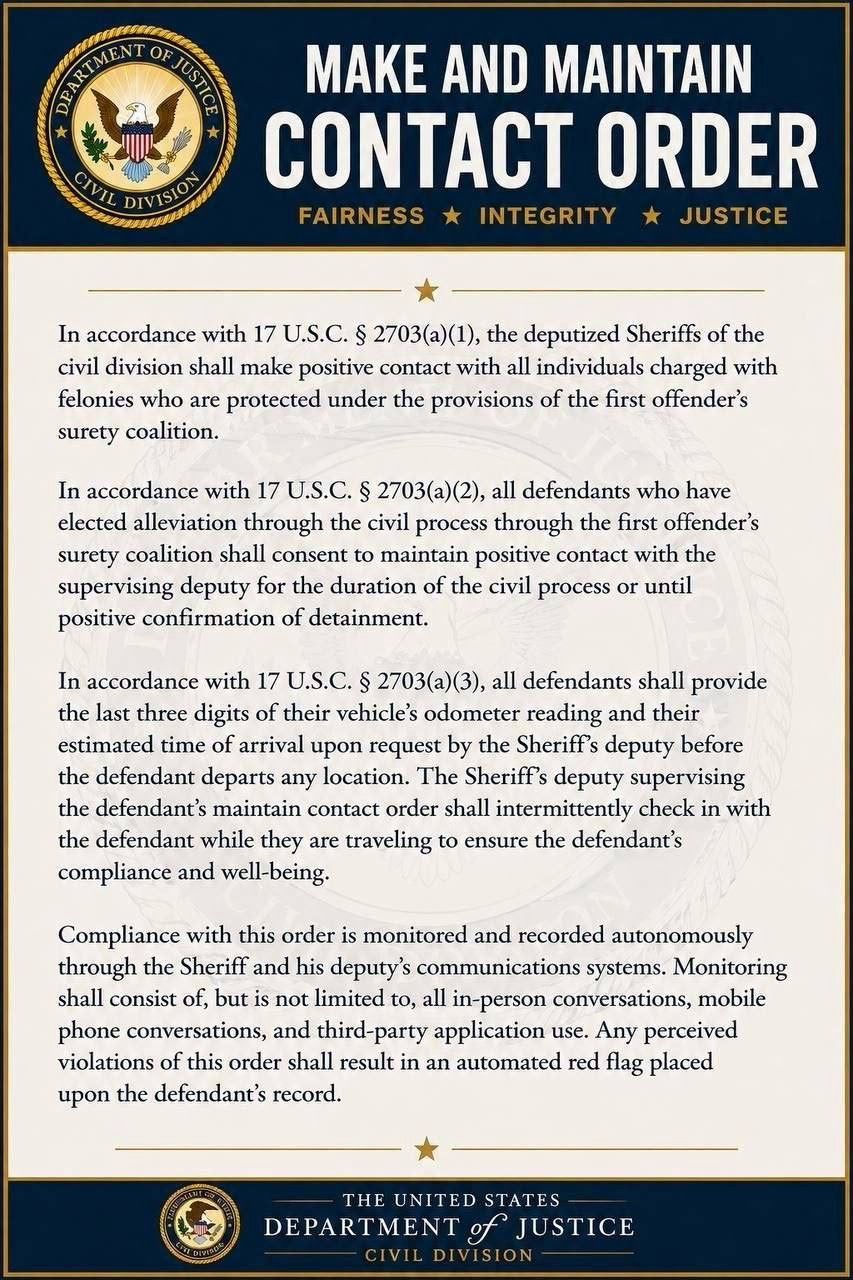
Make and Maintain Contact Order: This one is designed to keep a scammer on the phone with you the entire time you're driving to the ATM — asking for your odometer reading and ETA "for compliance." In a real legal situation, no deputy tracks your drive to a kiosk in real time over the phone.
If you ever receive documents like these — however official they look — stop, don't send anything, and text or call us at 503.985.8066 or run it through our free Scam Checker before you act.